|
Gleason, Tennessee: Fancy Hotels and Sweet Potatoes
By Virginia Vaughan
From Weakley County, Tennessee
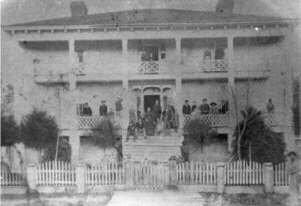 Gleason had two hotels in the early days of its
history. The Jones Hotel was located across from where Ruby’s
Restaurant was. The space is now a modern parking lot complete with
lamp poles and landscaping. The other hotel, the Whitworth, was across
from the depot. Both were used by the many drummers that came in on
the trains and plied their wares in Gleason and surrounding areas. The
Whitworth was said to be the finest hotel between Memphis and
Nashville. Elegantly furnished rooms rented for $2 a day and there was
a grand ballroom for dances and entertainment. Gleason had two hotels in the early days of its
history. The Jones Hotel was located across from where Ruby’s
Restaurant was. The space is now a modern parking lot complete with
lamp poles and landscaping. The other hotel, the Whitworth, was across
from the depot. Both were used by the many drummers that came in on
the trains and plied their wares in Gleason and surrounding areas. The
Whitworth was said to be the finest hotel between Memphis and
Nashville. Elegantly furnished rooms rented for $2 a day and there was
a grand ballroom for dances and entertainment.
In the early 1900’s,
an opera house was built above Ammon’s Drugstore. The electric
lighting came from privately installed dynamos across the street. With
a seating capacity of 200 people, the space was often filled when
traveling theatrical companies came to town. Moving pictures were
often shown and once, Cole Younger, the famous outlaw, gave a
performance.
Some of the firsts for
Gleason are; first hotel by Andrew Swaim; Jake Parks owned the first
steam engine; the first town well was in the middle of Center Street;
the Masons were organized in 1861; the first dry goods store was owned
by Polk Alexander; the first garage was run by Max Levy and E. A.
White, who owned the first automobile in 1913; the first brick
building was build by George Lassiter; Joe McGlothin built the first
frame house; the first running water was in 1905; Obe Parks owned the
first motorcycle in 1912; the first fire engine in Gleason was
purchased in 1927; the first telephone was in the Jones Hotel; the
first graph phone was owned by Frank Trevathan in 1915; the first
radio was owned by Aubrey Phelps and the first television by Harry
Edwards. The first cotton gin was operated by Bill Bragg; the first
tobacco factory was operated by Leonard Freeman. In 1913, W.R. Hawks
introduced the first sweet potato hampers used for shipping sweet
potatoes and, in 1916, W. R. Nants operated the town’s first veneering
mill where the sweet potato hampers were produced. It closed in 1954.
At one time Gleason
was known as the sweet potato capital of the United States. The
growing and shipping of sweet potato plants began in the 1920’s and in
the beginning there was only one variety, the “Nancy Hall.” Later, J.
D. Bradberry and two friends ordered sweet potato plants from Puerto
Rico and, through grafting with Southern Yam plants, they produced a
variety of sweet potato which they named the Puerto Rican. In time,
there were 12 different varieties produced in the area. In the heyday
of growing plants for shipping, there were about 30 different
shippers.
In the late 1980’s
only two companies shipped sweet potato plants, the Margrave Plant
Company and the Steel Plant Company. In 1999, the Steele Plant Company
is the only one still in business. Started in the 1950’s by W. Claude
Steele and his son-in-law, Dudley Sanders, it was not uncommon for
trucks to load a million plants for transporting to markets throughout
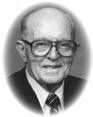 the south. Ken Sanders, the son and grandson of the founders, carries
on the business today. “We supply our own mailing list and also rely
upon seed companies for our market,” he said. “I can remember the days
when plants were shipped by parcel post trucks and shipped by Railway
Express. Millions of plants left Gleason every week during the growing
season. As a result of the large shipments, our post office was
upgraded from a third class to a second class facility.” According to
Ken, the sweet potato is making a comeback in the vegetable market.
It is one of our most nutritious foods and is loaded with
beta-carotene, which helps fight cancer.” the south. Ken Sanders, the son and grandson of the founders, carries
on the business today. “We supply our own mailing list and also rely
upon seed companies for our market,” he said. “I can remember the days
when plants were shipped by parcel post trucks and shipped by Railway
Express. Millions of plants left Gleason every week during the growing
season. As a result of the large shipments, our post office was
upgraded from a third class to a second class facility.” According to
Ken, the sweet potato is making a comeback in the vegetable market.
It is one of our most nutritious foods and is loaded with
beta-carotene, which helps fight cancer.”
In 1974, the newly
organized Gleason Gazelles, a civic organization composed of women in
Gleason, who were interested in the welfare and growth of the
community started the annual Tater Town Special. In 1998, the event
celebrated its 25th anniversary. Source:
The Weakley County Press (Provided to
Gleason Online by Joyce Wray).

W. Claude Steele Photo Courtesy of Steele Plant Company |