|
Gleason Cumberland Presbyterian Church
In 1865 the first church was organized in Gleason. The church was the
Oakwood Cumberland Presbyterian Church. The meetings were held on
the lower floor of the Masonic hall, and Reverend E. B. Johnson
served as the first pastor.
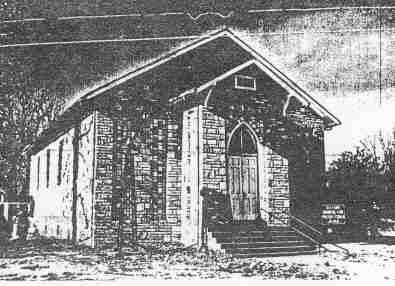
Some interesting comments in regard to the Oakwood Church were found
in the personal diary of H. C. Johnson:
September 30, 1873: Met the session at Oakwood, only three of seven
elders present. Religion is cold at this place.
March 1874: Regular time for preaching, but not able. May the Lord
keep them all from evil.
June 1874: Went to Gleason and preached. This is the beginning of my
protracted meeting. The meeting continued in the spirit of great
power for sixteen days. The church rejoiced much and 32 or 33 made
professions of the religion of Jesus.
After ten years in the Masonic Hall, the congregation built a new
frame building. Records show that at the first service when the
chandelier was lighted, it fell to the floor; and the new building
was burned to the ground. Soon afterwards, a new building, which
remained in use for ninety years, was erected across the railroad
tracks, but was not dedicated until December 4, 1982. In 1889,
Hopewell Presbytery had approved the name change from Oakwood to
Gleason Cumberland Presbyterian Church, since the name of the town
had been changed to Gleason.
It is known that the Gleason church was one of the most active in town
in the years from 1900 to 1925. In those years the membership
totaled more than one hundred and fifty members. Many tent revivals
were held as a joint meeting of all the churches and with a lot of
good results. Some of the families that were active during those
years were: Richees, Heaths, Rushings, Terrells, Dunlaps, Drewerys,
Brummitts, Tranthams, Bynums, Cravens, and Castlemans.
Baxter Rucker has served as Clerk of Session since February 1959.
Since 1974, Paul and Edith Rushing have served as Treasurer of the
church and Leon Purvis has served as Song leader since 1961. The
late Reverend O. A. Gardner holds the distinction of being the
pastor for the longest period of time.
The present pastor is the Reverend George E. Butler who has served the
church since November 7, 1976. He, his wife Lucille, Barnhart Butler
and his son Robert are natives of Camden, Arkansas. Soon after
accepting the pastorate, Bro. Butler realized the need for a new
building program. Under the leadership of Pastor Butler and with the
very able contractor, Wilfred Bond of Dyer, the congregation moved
into a new building located on New Highway 22 at Crestview on July
4, 1982. A dedication service for this debt free building was held
on Sunday afternoon, November 6, 1983, with open house and a
reception in the Rushing Fellowship Hall, named for two faithful
member who have belonged to the church for more than fifty years.
These two members were Paul Jones Rushing and wife, Edith Dunlap
Rushing, the same two who gave the land and matched funds for the
new building without which the venture would not have been possible.
They first fellowship dinner in the new building was a "victory
barbeque dinner" given by Roy and Mary Elizabeth Travillian. Guests
at the victory dinner were those who had contributed to the building
fund.
The present church has a steeple erected in memory of Ray
Dellinger, an elder from 1952 until his death in 1980 which was
made possible by friends and relatives who contributed to a Memorial
Fund. In the sanctuary is a lighted cross, a baptismal font, and a
matching flower stand all built by Joe Pachil, another elder in the
church. A lovely framed crocheted Lord's Prayer wall plaque, made
by the late Mary Newberry Fowler, hangs in the foyer. A mural of
Noah's Arc painted by Tuva Page Stephens occupies one wall of the
nursery. Three pews from the old church have been preserved, and
Mary Elizabeth Owen Travillian had these refinished and made
cushions for them.
It was in 1958 that the remaining membership of the New Hope Church
transferred to the Gleason Church which became the legal trustee of
the New Hope building and Grounds. Then, on August 29, 1984, the Mt.
Zion Church officially transferred to the Gleason church becoming an
integral part of the congregation. Although the active membership of
the combined church is only sixty-five, the church provides a manse
for the pastor's family, pays presbyterial dues, maintains limited
outreach and contributes to all other programs of the church,
including the support of the Memphis Theological Seminary and Bethel
College of McKenzie, Tennessee.
All fifty year or more members, who have been named the "Gold Members"
are:
| |
1914 - Katherine
Trantham Dickey
1915 - Marie Rushing
Dunlap
1919 - Annie Heath
Brawner
1919 - Mary Heath
Brummitt
1920 - Sudie Brooks
Cravens
1921 - Paul Jones
Rushing
1921 - William Vernon
Richee
1922 - Rubye Richee
Taylor
1922 - Hattie Jackson
Trantham
1924 - Lillie Mae
Heath Rucher
1924 - Edith Dunlap
Rushing
1926 - Opal Richee
Dellinger
1926 - Lois Health
Cravens |
|
Gleason First Baptist Church History
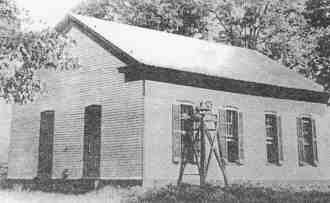 On
December 10, 1879, James Smyth sold one acre for $50 to the Gleason
Baptist Church. The deed was recorded on February 2, 1880, at 4.20
P.M. This one acre is the present site of the Gleason First Baptist
Church. On
December 10, 1879, James Smyth sold one acre for $50 to the Gleason
Baptist Church. The deed was recorded on February 2, 1880, at 4.20
P.M. This one acre is the present site of the Gleason First Baptist
Church.
In the fall of 1887, the initial Weakley County Association was begun.
Gleason Missionary Baptist Church was one of the charter members of
the association and is listed in the first minutes. In a report in
1969, it was thought that this church was organized in 1888.
However, since the church was a charter member of the association in
the fall of 1887, it is likely that the church was organized in the
latter part of 1887.
The first pastor found recorded is S.C. Hearn, the pastor in 1888. One
hundred and fifty dollars a year is the first mentioned salary for a
pastor here at Gleason church. At the time the church was meeting
only once a month.
The messengers sent to the associational meeting in 1889 were J. W.
Boone and W. T. Davis. At that time the church was having preaching
on third Sunday only. In 1888, there were no baptisms, no one was
received for membership, there were no deaths, and one member was
dismissed. The total membership of the church was 33, and the
associational minutes recorded the contribution of this church as
$1.00. However, the entire association, consisting of 21 churches
contributed only $22.75.
The church entertained the Weakley County Baptist Association in 1892.
We entertained the association again in 1949, 1959, 1965, and 1986.
The frame building which had served as the church building was bricked
in about 1924 while Bro. T. G. Shelton was pastor.
On July 1, 1922, the church decided to have a "house cleaning" by
disbanding. They reorganized the same day. and the charter members
of the newly organized church were Mrs. Birdie Hamilton, Mrs. Polk
Smith, Mrs. Bettie McCaleb, Mrs. Claud Wilson, Mr. and Mrs. G.
Z. Summers, Era J. Summers, Mr. and Mrs. J. B. Brundige, Mr. and
Mrs. A. V. Allmon, R. T. Taylor, Will Spain, John T. Jones, and Mr.
and Mrs. A. V. Trevathan. They voted to keep the name of "Gleason
Missionary Baptist Church". Bro. W. E. Chadwick was pastor at t his
time and was elected to pastor the church after it was reorganized.
He is still living at the time of this writing. Bro. A. V. Allmon
was elected church clerk at this same meting and served in this
office until his death Oct. 14, 1979. L. Jack Dunning was elected at
this time and is still serving in this office. Mr. A. V.
Allmon and Mr. J. B. (Pete) Brundige became deacons June 1, 1924.
Mr. Pete Brundige remained a deacon (inactive) of the church until
his death.
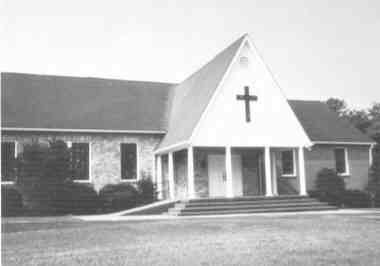 In 1947, the present auditorium was build and Sunday school rooms were
fixed in the older building. Bro. R. J. Cooper was pastor at
this time. In the mid 1950's, while Bro. Aubert Rose, Jr. was
pastor, the section of the church building that includes the
basement and balcony were added. On May 5, 1961, a piece of land
was purchased from J. W. Motheral. In that same year the first part
of the present educational building was constructed. Bro. Robert
Campbell was pastor at this time. On April 20, 1964, another block
of land was purchased by the church from J. W. Motheral heirs. Bro.
Robert Campbell was pastor. In 1977, the sanctuary was remodeled and
stained glass windows made possible through memorial were added. In 1947, the present auditorium was build and Sunday school rooms were
fixed in the older building. Bro. R. J. Cooper was pastor at
this time. In the mid 1950's, while Bro. Aubert Rose, Jr. was
pastor, the section of the church building that includes the
basement and balcony were added. On May 5, 1961, a piece of land
was purchased from J. W. Motheral. In that same year the first part
of the present educational building was constructed. Bro. Robert
Campbell was pastor at this time. On April 20, 1964, another block
of land was purchased by the church from J. W. Motheral heirs. Bro.
Robert Campbell was pastor. In 1977, the sanctuary was remodeled and
stained glass windows made possible through memorial were added.
Gleason First Missionary Baptist Church met in a special called
business meeting Nov. 2, 1980, and voted to build the newest
addition to the educational building. Bro. Kenneth Roberts was
pastor at this time.
Gleason First Baptist Church has Ordained and Licensed the
Following Men to Preach the Gospel:
| |
1949 - Ralph Allmon (Septermber
10th)
1970 - Jerry Dunn
(November 22nd)
1973 - Dean Doster
(June 24th)
1980 - Floyd (Lammie)
Lammersfield ( February 3rd)
1980 - Don Bullock
((February 17th)
1985 - Robert Tuck
(October 20th)
|
|
The present membership is 439 including resident and non-resident
members.
Record of Ministers to Gleason First Baptist Church:
|
Note. Ministers of Gleason First
Missionary Baptist Church Prior to 1916 include::
C. C. Hearn
C. C. McDearman
W. F. Matheny
G. T. Mayo
G. H. Stigler
M. E. Wooldrige
B. F. Smith
D. S. Brinkley
A. S. Hall |
1916 - C. H. Felts
1918 - H. T. Jones
1920 - J. H. Anderson
1922 - W. E. Chadwick
1924 - T. H. Shelton
1925 - C. H. Felts
1927 - R. E. Bledsoe
1928 - H. A. West
1932 - V. A. Rose
1935 - W. A. Gough
1936 - W. A. Farmer
1940 - R. C. Keathley
1941 - Gordon
DePriest |
1944 - James Williams
1945 - R. J. Cooper
1949 - Marvin Miller
1954 - Aubert Rose, Jr.
1956 - Hilliard Goode
1959 - Robert Campbell
1965 - Deryl Watson
1970 - James Smith
1972 - Henry Inmon
1974 - T. Lynn Walker
1977 - Kenneth Roberts
1987 - Chris Ward |
Deacons of Gleason First Missionary Baptist Church Since 1918:
J. H. Jones (1918); S. D. Summers (1918); H. H. Dunn (1918); L. E.
Duke (1924), J. B. Brundige (1924); A. V. Allmon (1924); Silas
Haskins (1931); Tom Cate (1931); L. E. Sandifer (1931); J. H. Logan
(1941); J. A. Darnell (1941); Ralph Allmon (1947); H.A. Stoker
(1947; Scott Ross (1947); Bernice Terrell (1947); Malcom Reed
(1953); Clarence Reed (1951); Finis Trentham (1953); Thomas Allmon
(1955); Joe Huey Hamilton (1955); Doyle Capps (1955); Harold Pinkley
(1955); l. Jack Dunning (1957); Raydean Verdell (1960); Junior Watts
(1960); Jerry Dunn (1963); Jack Phelps (1963); Lyndell Sawyers
(1967); Dean Doster (1972); Rupert Pritchett, Jr. (1972); Bill Brush
(1974); Jackie Esch (1974); Robert Tuck (1978); Floyd Lammersfield
(1978); Ronnie Dale Bates (1980); John Jones (1982); Grover Jennings
(1982); Timothy Ray Peery (1982)

Gleason Church of Christ
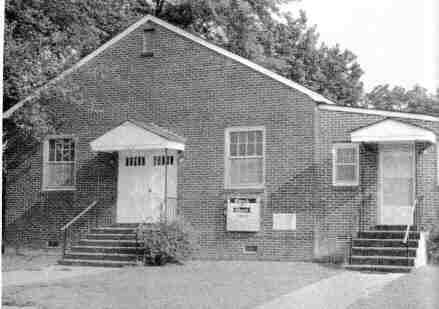 We
have no record or knowledge of there ever being a true Church of
Christ located in the town of Gleason prior to June 1948. In June
1948, the Macedonia Church of Christ sponsored a mission Gospel
Meeting held in a tent on the campus of Gleason High School, the
preaching being conducted by Brother G. E. Woods. This series of
meetings was well attended by members of neighboring congregations
and by about fourteen living in Gleason at that time who had no
local church affiliation. On June 27, 1948, we met regularly at the
American Legion building each Sunday at 2:00 P. M. for a period of
nineteen weeks. The first assembly was preached by Garvin Brundige. We
have no record or knowledge of there ever being a true Church of
Christ located in the town of Gleason prior to June 1948. In June
1948, the Macedonia Church of Christ sponsored a mission Gospel
Meeting held in a tent on the campus of Gleason High School, the
preaching being conducted by Brother G. E. Woods. This series of
meetings was well attended by members of neighboring congregations
and by about fourteen living in Gleason at that time who had no
local church affiliation. On June 27, 1948, we met regularly at the
American Legion building each Sunday at 2:00 P. M. for a period of
nineteen weeks. The first assembly was preached by Garvin Brundige.
On November 7, 1948, the congregation began meeting in a newly
acquired building, purchased by the Gleason congregation thought the
assistance of Brother Dick Adams of the Macedonia congregation,
consisting of residential property situated on the lot where
the present church building is located. During a period of several
months, the congregation met in a vacant building on Front Street
owned by Mr. Pete Taylor who gladly granted the use rent free.
According to church records, the first year of operation of the
Gleason congregation shows an average attendance of 47 and an
average contribution of $36.00. During the first few months, there
were more visitors that local members, due to the fact that there
were only 14 local members, and the 2:00 P.M. meeting time allowed
other congregations to attend.
The Gleason church was partially supported by several churches in
Weakley County and by the Jackson Avenue church of Memphis
from its earliest beginning in 1947 continually thru December 1954,
as which time it became self supporting.
The Gleason church did not have the services of a full time minister
until 1948 when Brother Edward I. Harper moved to Gleason and began
serving the congregation as full time resident minister. Bro.
Basil Overton came in 1950 till 1952.
The Gleason church has shown a slow but steady growth since 1948. In
1968 - 1969, there were 82 members with an average contribution of
$130.00.
In 1976, the church bought the preacher's home beside the church (old
Baptist parsonage) and in 1978, new classrooms were added to the
church building. The church parking lot was paved in 1980, and the
front porch entrance was built in 1985.
In 1986, there were 90 members with an average attendance of 76
and an average contribution of $490.00
Gleason United Methodist Church
During the years 1868 and 1869 many people were
disturbed and unsettled because of the ravages of the Civil War and
were casting about for quietude and a place to establish a new home.
The village grew beyond all expectations. The town and
church grew up together. The church was already established in the
hearts of a small group of persons of kindred spirits who felt a
dire need for fellowship in service and worship of the true God, the
Creator of all things. Family alters were already established in a
few of their homes. Having no church did not deter the small but
devout group of people in their earnest endeavor to secure a
permanent place to worship. As a rule these sturdy settlers were
poor. They possessed very little of what the world calls wealth.
They knew nothing of the labor-saving devices of today, yet they
were happy and contented. Though they were engaged in strenuous
labor day by day, their voices echoed and re-echoed in refreshing
strains o'er hill and vale as they wielded the hammer, pushed the
saw or the plane, or walked in the fresh soft earth as they followed
the trail of a crude plow drawn by a slow plodding mule. This peace
and security of mind was the result of regular seasons of fervent
prayer.
Revivals, called "spiritual feasts" were held
occasionally in neighboring communities. As much of the daily work
as possible was suspended. The two horse wagon, the only means of
conveyance at that time, loaded to capacity with neighbors and
friends, made their way to both day and night services. These
services were a means of grace that brought the earnest worshippers
into closer fellowship and communion with their Lord; they were not
wholly immune to criticism and persecution.
The time had now come when they could no longer meet in
their homes for worship as they had been doing. They had increased
in number. Their fellowship had been sweet; they worked and
worshipped together. In sickness or distress they were present to
render every service possible to alleviate suffering and to supply
the need for comfort and pleasure of the sick. These sincere
worshippers had grown steadily in grace and knowledge of the Giver
of Abundant Life. Now, they must find a larger place to meet.
The first place for worship was three-fourths
miles west of the little town of Gleason. Perhaps, it was in
an open space in the shade of the stately oaks, with the beautiful
blue sky for a roof over their heads, the soft verdant earth for a
carpet beneath their feet. Somewhere in this vicinity stood a little
Methodist Protestant Church. It is thought to be the first meeting
place outside their home. After some time, the little assembly moved
to a cotton gin, when not in use, across the road from Mr. Polk
Alexander's double log house. In autumn, this group found a
ready welcome in the First Cumberland Presbyterian Church for
services. This was a two-story structure. It was used as a Masonic
Hall, for worship on weekends and as a school room during the
weekdays. After a period of time, this building being in need of
extensive repair, was torn down. The present Cumberland Presbyterian
Church took its place on a different lot.
The "Roving Methodists," as they were called, now had
no place to worship. The Missionary Baptist people kindly invited
them to use their building. They gladly accepted their invitation.
At this time, the four denominations of the town had only one Sunday
each in a month for worship. The people of all creeds came together
as if they were all of one name and faith. All differences were
forgotten.
While everyone was deeply grateful for every courtesy
shown them, they were determined to have a permanent meeting place.
Every legitimate means was used to accomplish their desire. The men
furnished timber and labor to build a church building. The women
were not idle. The youth of this congregation were eager to help.
Some solicited money to buy a bell to call the people together to
worship.
Finally, a new frame building was being erected on the
plot of ground donated by Mr. A. M. Smith and wife. This plot of
ground was west of the N & N Railroad and contained one-half acre,
more or less. This ardent group was so overjoyed to have a permanent
place to worship, they did not wait for the building to be finished.
As soon as the floor, roof and outside walls were partly completed,
they moved in for regular worship. Since there were no seats,
piles of unused lumber provided for that need. Mrs. Nan Burnett,
Mrs. Polk Alexander's mother, taught the first Sunday School Class.
She brought a chair and a song book from home and The Methodist
Catechism, a little book of questions and answers on the bible,
was their literature. This faithful group seemed to take on a new
life in their service of song, prayer and praise as they realized
they soon would be duly organized and have an appointed leader.
The church was soon completed. The goal of their hard
work and planning had been reached. Their gratitude to God for His
goodness, unending mercy and guidance through all their endeavors
was beyond the power or words to convey.

The church was officially organized December 27, 1875, with Dr. and
Mrs. J. W. Bandy and their son, R.W. Bandy. Mr. A.D. Bobbitt, Mrs.
Nan Scott (Phelps), Mr. H. Health, Mr. Thomas Walters, Mr. William
Bragg, Dr. G. H. Burnett, and B.F. Watts as Charter Members. This
church became a part of the McKenzie Circuit with Rev. H. B.
Covington as pastor until 1879. The pastor was called "The Circuit
rider". He served four churches and rode a horse to his appointment.
There was no parsonage, so he spent Saturday night in the home of
some of his members. It was considered an honor and a
benediction to have the minister in the home. Each district had a
Presiding Elder. He with the Stewards of each church on the circuit,
together with the pastor, met quarterly to attend to business
pertaining to the churches.
In 1880, Gleason Circuit belonged to the Paris District. Then in 1885,
the Paris District became the McKenzie District again. This was a
very fruitful period in spirituality and in numbers. In 1888, the
McKenzie District became the Paris District again. An
additional plot of land was purchased from Mr. Harrison Health in
1888. This one and one-half acre plot of land is the present church
site today.
In 1889, Rev. C. C. Bell and Rev. McClusky, Cumberland Presbyterian
minister, held one of the greatest revivals of this church.
During this revival, one of the farmer's wives was so anxious to
attend church services that she hurriedly dressed and took a short
cut through the field to the church. She arrived on time, but she
was amazed to find that she was wearing her dress wrong side out.
Many of the ladies were so eager to hear the gospel that they
frequently forgot to remove their cook aprons until they
entered the church.
In 1890, during the last year of Rev. C. C. Bell's ministry, our first
organ was bought with money collected by Misses Ione Alexander,
Mattie Bandy and others. Miss. Mattie Bandy became the organist and
served in this capacity for seventeen years.
In 1895, the Epworth League, a very strong active body, was organized
for training young people in Christian work. The young people and
children of the town, not just the Methodist, took active part. The
grown-ups had change of the children's classes. These meetings
were held on Sunday afternoon.
About 1904, Mt. Hermon and Olivet became a part of Gleason
Circuit with Gleason and Liberty. Later El Bethel took Mt. Herman's
place. Gleason Circuit consisted of Gleason, Liberty, El Bethel, and
Olivet until 1929 when Gleason was made a station.
In 1907 and 1908, the former church building was erected. The old
church was sold for $50.00. The pews from the old church building
were used in the new one until about 1942. These were replaced by
new ones including the pulpit chairs. Eight of these pews are in
memory of Mrs. George Brummittt, Mr. and Mrs. S. L. Costen,
Mrs. Mollie Bobbitt, Mr. and Mrs. J. W. Duke, R. and Mrs. R.W.
Bandy, Mr. and Mrs. Polk Alexander, Mr. and Mrs. J. C. Smyth and
Mrs. Fannie Dinning. The Bible was a gift from Mrs. Hugh McCain, the
former Miss. Ione Alexander on September 17, 1937.
In 1909, the first parsonage, a frame building, was erected. The money
for this project was acquired by the women of the church who pledged
their Sunday ice cream suppers and personal gifts. Other funds for
the project were raised by the men in timber. Labor and money. Mr.
A. M. Smyth and L. T. Smyth, his wife, donated the land for the
parsonage of the 22nd day of March, 1909.
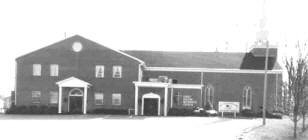 The Willing Workers Class were instrumental in starting a Church
School Building Fund. An electric organ, sponsored by the Wesleyan
Service Guild, was later purchased. The organ was dedicated on July
11, 1954. The Willing Workers Class were instrumental in starting a Church
School Building Fund. An electric organ, sponsored by the Wesleyan
Service Guild, was later purchased. The organ was dedicated on July
11, 1954.
Construction on the new education building began in 1956, and
the first floor was completed in 1957. Final construction on the
second floor was completed in 1960.
In 1963, the church received notification that Mrs. E. S. Craig had
given a $5,000 memorial to the church. The memorial was in memory of
her parents, Mr. and Mrs. Polk Alexander. The money was to be placed
in the church's building fund for the erection of a new sanctuary in
the future.
In 1968, the church's name was changed to the United Methodist Church
after union with the United Evangelical Brethren Church. In February
the official name became First United Methodist Church of Gleason.
A certified kindergarten was begun on November 1, 1971, with Mrs.
Dale Windsor as teacher. This class continued to meet in the
fellowship hall until a public school kindergarten was begun at
Gleason School in the fall of 1973.
The church celebrated its centennial on December 27, 1975. A
centennial book was prepared by the ladies of U. M. W. which
included the brief history of the church from its founding on
December 27, 1875 to December 27, 1975. Dr. W. S. Evans preached the
sermon on the morning of the centennial observance followed by a
fellowship luncheon and gospel singing in the afternoon. The church
was filled to capacity with many former members returning. Several
generous gifts were made to the building fund bringing the total to
date at $61,319.55.
At the October 1975 meeting of the Administration Board, the board
approved by a voice vote of 9 yea to 3 nay to have a charge
conference of the entire membership of the church to vote on tearing
down the old sanctuary and constructing a new sanctuary using the
architects plans adopted in 1968. At the charge conference
held on Sunday morning June 27, 1976, the vote was almost unanimous
with only eleven "no's" not to build a new sanctuary.
The demolition of the old structure built in 1908 was begun on July
12, 1976. The church bell was retained along with the stained glass
windows to be used in the new structure which was completed in
December 1976. The first service was held on January 23, 1977, when
the Altar Cross and Altar Candles were transferred from the
temporary meeting for worship in the fellowship hall to the
new altar in the new Sanctuary. A brief service was concluded with
the ringing of the old church bell which had been mounted on a new
brick structure on the lawn of the new facility. This was the
realization of a dream begun in the Fidelis Sunday School Class who
started the building fund many, many years earlier.
Funds to retire some $68,000 debt were raised from the membership and
a consecration service service was held on April 23rd, 1987, with
Bishop Earl. G. Hunt, Rev. Edward Crump and Rev. Jerry Bynum
conducting the consecration service. An attendance record was set on
that Sunday with 315 members, former members, former pastors, and
guests present.
The debt was completely paid by December 1979, but the official
dedication service was not held until April of 1982 with Bishop
Edward Tullis and Rev. Stanley Waldon in charge of the service.
All the interior furnishings: altar, pulpit, lectern, nave pews, choir
pews, baptismal font, clergy pews, altar cross, hymnals, pew Bibles,
chime system, outside lighting, flame and cross emblem with church
name, choir director's music stand, and silk flower arrangements
were given in memory or in honor of church members, friends, and
families of Gleason community and First United Methodist Church.
In the spring of 1986, a new Allen Digital Computer Electronic Organ
was purchased by the church after receiving a substantial bequeath
from the estate of Ms. Willie D. Klutts. A fund raising organ
concert was held on the evening of March 2, 1986, when gifts in
memory or honor of members were given to completely retire the
balance of indebtedness on the organ.
A substantial memorial gift in memory of Mr. A. E. Carney was given to
the church by Mrs. Vida Carney to be used to pave the driveway
behind the church and beside the parsonage. This gift and money from
the church's memorial fund was used to complete the project. A
shelter to protect worshippers who wish to enter through the back
entrance is being planned for construction some time in the future.
The membership now stands at 210 with an average offering of $1,100.00.
[A note about the bell that now stands on the lawn of the new United
Methodist Church]
During the early days in Gleason, the bell that now stands on the lawn
of the new United Methodist Church tolled if a death occurred in the
community; only one stroke at intervals of a few seconds was sounded
preceding the funerals. This bell hung in the belfry of the old
Methodist Church and is still rung on special occasions such as when
our church debt was paid off.
Pastors of Gleason United Methodist Church: 1875 - 1987
|
|
1875
H. B. Covington
1880
R. R. Nelson
1881
J. H. Witt
1884
R. L. West
1987
R. E. Humphrey
G.W. Banks
1888
R. E.. Bell
1891
J. J. Witt
1892
H. B. Owens
1893
J. T. Wiggins
1895
E. S. Harris
1896
C. A. Waterfield
1897
Cleanth Brooks
1898
A. D. Maddox
1899
J. W. Joyner
1903
E. J. W. Peters
1906
R. P. Duckworth
1910
J. S. Renshaw
1911
S. R. Hart
1912
W. T. Holley
1916
S. A. Martin
1917
J. C. Cason
1919
T. H. Dacis
1920
J. E. Underwood
1922
W. P. Pritchard
1923
I. M. King
1924
J. E. Jones |
1925
M. C. Yates
1928
W. S. Evans
C. A. Waterfield
1929
L. L. Jones
1932
H. W. Davis
1934
K. G. Dunn
1937
E. V. Underhill
1940
Paul T. Lyles
1943
Ray Pafford
1945
E. W. Maxedon
1948
J. B. Underwood
1952
Charles A. Tripp
1953
Wilson E. Jones
1954
Edgar D. Farris
1957
J. W. Summers
1960
Paul Eubanks
1963
Wayne Fesmier
1965
Bevington Farnsworth
1968
Charles Ward
1969
A. H. McLeod, Jr.
1971
Paul Jones
1975
Jerry Bynum
1978
Charles Brady
1980
Stanley Waldon
1986
Glenn Elliot
1987
Jack Dickerson |
Members of the Methodist Church who have entered into the ministry are
Henry Trevathan, 1931 (was a Chaplin in the Navy); Frank L. Daniel,
1945' Tommy Bullock, 1957; Jerry Johnson, 1974.
Pleasant Valley Church
In the year 1840, a log church was standing about one hundred yards
south of Spring Creek called Pleasant Valley. This location was west
of old Highway 22, about half way between McKenzie and Gleason. The
log building's entrance was one front door on the north side. There
were three or four windows with small panes on each side. The pulpit
was an old time high pulpit, behind which was an open and shut
window. The pews were two rows of split seats. There was no piano or
organ. When large rains came, the water would rise on the floor of
the church. About the year 1886, the Rev. Emsley Plummer was the
pastor. The Rev. Priest must have followed him as pastor, and a Rev.
West also served as pastor at about this time.
About 1888, the church sold its log building to Mr. Jim Gardner, and a
new frame building was erected. The new building was located about
one hundred feet from the site of the old church on the opposite
side (west) of the road leading to the church.
This building had a door on each side of the front. The windows were
large four-pane windows. The pulpit was in the center, with a small
stand on either side. No windows were in the back of the building.
The pews were placed in three rows with "Amen" and "Awomen" corners.
Kerosene lamps swinging on pulleys, lighted the church. There were
also wall lamps and a few candles used.
Some of the pastors who have served the Pleasant Valley church include
the following:
| |
Rev. A. D. Mattox
Rev. John Witt
Rev. Jolley
Rev. M. T. Lowe
Rev. J. C. Rudd
Rev. T. P. Riddick
Rev. N. W. Lee
Rev. J. L. Weaver
Rev. A. D. Mattox
Rev. R. W. McDaniel
Rev. Albert Wilson |
about 1894
about 1898
unknown
about 1902
about 1903
about 1908
about 1912
about 1915
about 1915
about 1916
in 1917 |
In 1918, the congregation decided to move the church out of the creek
bottom. The members of the side of Spring Creek toward Gleason build
the New Pleasant Valley Church, and the members on the side toward
McKenzie build the Community Grove Church.
New Pleasant Valley Church
Members of the Old Pleasant Valley Church on the side of Spring Creek
toward Gleason wished to build a church of their own., as it became
necessary to move the church due to high water and sand drifting
into the building. In about 1918, a building was erected on the site
where the New Valley Church now stands. The deed for the land was
recorded September 18, 1918, by R. W. Bandy, in Deed Book # 48, page
537, at Dresden, Tennessee in Weakley County. The deed was made out
to the Trustees of the new church by E. L. Green and his wife Jeffie.
The Trustees were R. Johnston, J. M. Gaskins, W. S. Shell, J. A.
Doroughty and J. W. Denning. Some of the charter members of the
church included Mrs. Betty Stoffle, Elsie Winsett, S. C. (Lathe)
Dellinger, R. (Bob) Johnson, J. A. (Joe) Doroughty, W. S. (Will)
Shell, J. M. (Jim) Gaskins, and J. W. (John Bill) Denning. [Note:
Mr. J. D. Dellinger, a small boy at the time, remembers these.]
New Valley Cemetery was know as the Walter's Graveyard. During
the year 1926-1927, New Valley was on the McKenzie Circuit. Mr. W.
C. Prichard was the presiding elder, and Rev. J. W. Fowler was the
pastor.
When the parsonage, located in Gleason on Cedar Street, was remodeled
around 1960 - 1962, old records were either misplaced or destroyed.
Pastors remembered who served the New Valley Church were as follows:
| |
J. C.
Cason
T. H.
Davis
J. E.
Underwood
W. S.
Evans
J. W.
Fowler
A. B.
Davidson
Steadman
Bagby
Edwin
Diggs
W. A.
Swift
Willie
T. Pafford
Hershel
Blankenship
P. L
Archibauld
A. G.
Melton
Frank
Daniel
W. W.
Phillips
Joe
Wheatley
C. V.
(Carl) Stacks
Harold
Vaughn
James
Hopkins
Harold
Craig
Richard
Kautz
R. B.
Stone
Charles
W. Brinkley
Jerry
Bynum
Charles
Brady
Stan
Waldon
Glen
Elliott
Jack
Dickerson |
1917 -
1918 1919
- 1920
1921 - 1922
1926 - 1927
- 1932
1932 - 1934
1934 - 1936
1936 - 1939
1939 - 1943
1943 - 1944
1944 - 1946
November, 1946
- 1953
1953 - 1956
1956 - 1959
1959 - 1960 [6 months]
1960 - 1963
1963 - 1965
1965 - 1969
1969 - 1972
1972 - 1975
1975 - 1977
1978 - 1980 [October 2]
1980 - 1985
1985 - 1986
1987 - present |
The parsonage was sold in 1974. The charge was divided, with the
churches placed with other charges. New Valley was placed with
Gleason as and extended Ministry, Reverend Jerry Bynum was the
pastor. Through this arrangement the church has been able to have
worship services at 10:00 A. M. each Sunday morning. The churches
that made up the former Gleason Circuit were New Valley, Liberty, El
Bethel, and Olivet - all Methodist Episcopal Churches.
New, seats, a pulpit, and chairs and tables were put in the church
early in 1970. Also, the Claude Williams family put carpeting in the
church at that time. In 1985, the church attendance was so low that
Sunday School was discontinued.


The history of the Gleason community provided in
Oakwood-Gleason: A Look Back provides an account of Gleason's history up
through the time the book was originally published. As some 20 years have now passed since its publication, Gleason Online is providing a "History Update"
feature, for each section of the book, for those wishing to add
important historical information relevant to the Gleason community. Contributions can be submitted via E-mail attachment by
clicking on the "Website Visitor Comments" graphic, provided above.
|